
Why the singularity is impossible
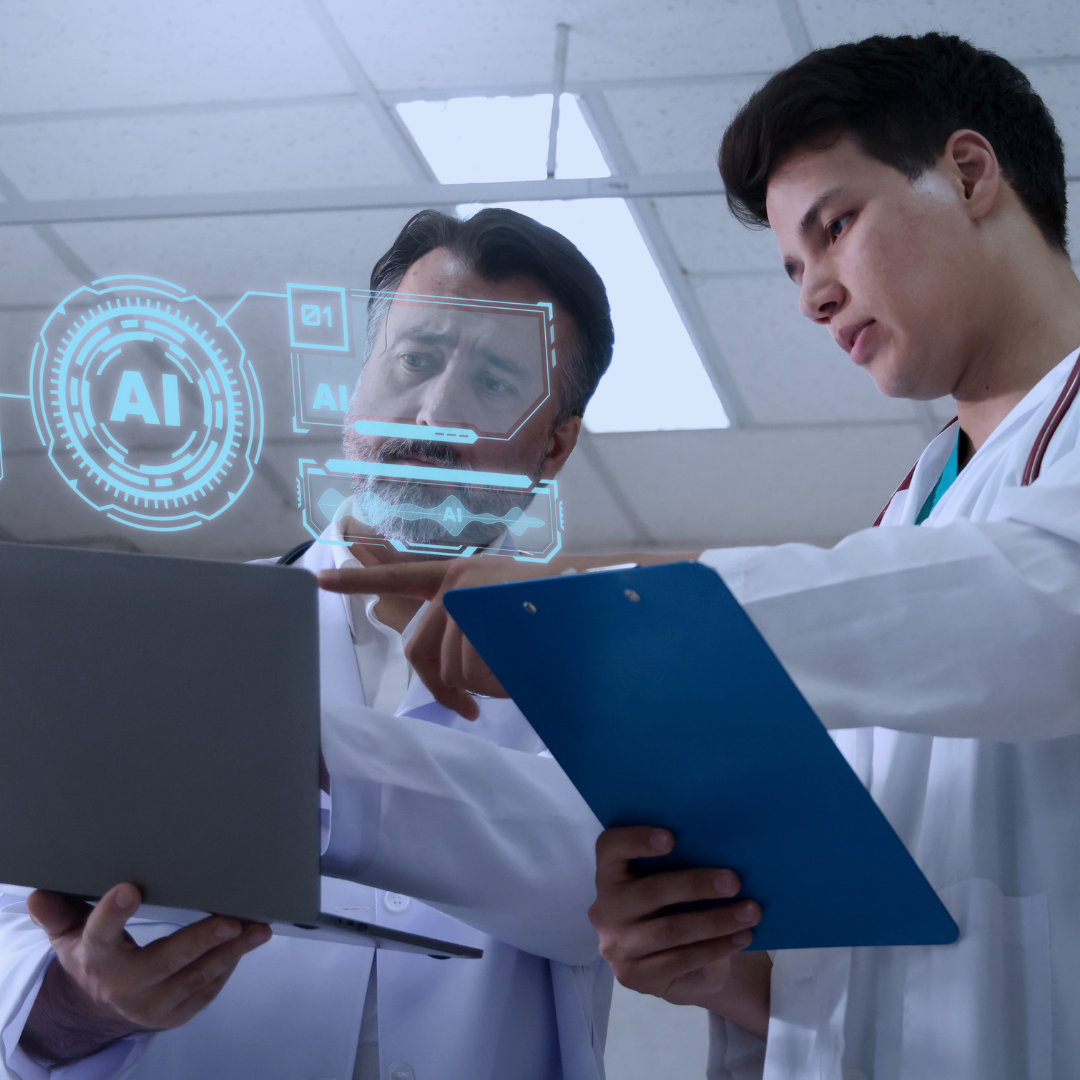
Instead of a single, runaway exponential curve where humanity becomes instantly helpless, I argue that AI progression will follow a series of predictable, manageable, yet highly disruptive S-Curve Transitions.
The moment when humans create an AI capable of making better AI has already arrived. We understand that when AI becomes superintelligent in coding it will write code that can improve code. LLMs are capable of identifying weaknesses in human-written code and are being used to improve that code. This in turn is likely to assist humans in their efforts to improve LLMs but is not likely to drive a dramatic increase in intelligence.
The conventional idea of the singularity is that there is a rapid loop that leads to runaway and exponential growth in intelligence. The output of the AI can be used to create something that can create better output. There are some assumptions, the first is that there may be software (coding) improvements that could improve AI. The second is that hardware developments are not a critical bottleneck and third that we do not require conceptual developments in our understanding of intelligence.
It is well recognised that current AI training is highly inefficient, requiring millions of examples whereas human intelligence can learn from a few examples. Superintelligence in coding will not necessarily translate to improved pretraining or artificial general intelligence AGI. It is certainly plausible that new code will cause a significant improvement but it is not likely to create an ongoing feedback loop.
Feedback loops
A well-known feedback loop is when a microphone is put close to the speaker. The noise from the speaker is amplified causing some frequencies to become loud. The process is uncontrolled but quickly reaches its maximum. Similarly chess programs have been able to reach superintelligence in chess but then reached a maximum. The area of superintelligence driven by feedback is likely to be fairly narrow and reach a maximum.
Any advance achieved through a feedback loop is likely to be disruptive and even superintelligent coding alone will transform IT. As most of human systems are controlled by IT the impact would be felt in every area of life. Companies that rely upon selling legacy code will be replaced with new companies that offer free and better products. Already Chinese companies are offering LLMs at no cost that can be downloaded and used locally.
Some types of superintelligence will be transformative for the world and create a feedback loop. Together these superintelligences will open further opportunities and there may be emergent properties but this falls short of a mechanism to create the singularity. If feedback alone cannot lead to the singularity then what would be required to achieve a self-improving intelligence?
Artificial General Intelligence AGI
AGI is a theoretical system which has a broad area of intelligence so can link different abilities and create emergent properties. There are two major approaches that could achieve AGI, the first is linking together multiple superintelligences and the second is to create a multimodal approach where AGI emerges from the training. Both have promise and there is no reason to suppose that AGI will not be achieved at some point.
The route from AGI to the singularity is more difficult to plot but it is plausible that an AGI that has the same intellectual power as the human race would be able to find solutions to each of the barriers to improving intelligence. Brute force intelligence would identify steps that can lead to better intelligence. Areas of superintelligence like mathematics are likely to be low hanging fruit but progress will slow as problems become less abstract and more difficult.
Arguably the main barrier to AGI and the singularity is the transformer, compared with cortical columns it lacks the ability to flexibly use information. If an AI was to develop a neuromorphic transformer then an important constraint would be removed. Any AI that can learn any area from a small number of examples would be able to scale rapidly. Functionally this change would mimic the singularity although in reality the AI would just be developing on the neuromorphic transformer in the same way as humans developed from the original transformer.
The singularity or S-Curve Transitions?
The singularity is a mythical trajectory where AI suddenly become capable of self-improvement. Due to scaling and speed advantages of machines this leads to further improvements in their ability to self-improve exponentially. This trajectory is likely to be wrong and may even be mathematically impossible. Any improvement in AI has a chance of improving its ability to self-improve but most will not.
The chance that AI will discover something that will help self-improvement will increase with both superintelligence and AGI but is random. Both superintelligence and AGI may arise from better AI but the simple idea of an improvement leading to better self-improvement is too simple. The trajectory is likely to be more of a S shape curve with slow initial progress followed by a rapid acceleration and then a plateau rather than an exponential curve.
Because this trajectory is likely to occur first in coding, then in mathematics ‘the singularity’ is likely to be many breakthroughs over several years. These S-Curve Transitions are not a transcendent intelligence explosion but a phase change where technology becomes capable of a specific function. Overlapping S-Curves can create an envelope curve which can mimic the singularity. However unlike the singularity where humankind is helpless, each of the S-Curve Transitions can be managed with appropriate and coordinated action.
Conclusions
There is a theoretical path to an intelligence explosion, the creation of a neuromorphic transformer that can rival the human ability to process data. The cortical columns in the brain can already create general intelligence from limited data over a few years. This advance would reduce the cost of compute (the current limitations) and dramatically improve performance to general superintelligence without other discoveries. I call this the Cortiform Inflection and it will not be stopped by restricting current LLMs or slowing progress.
From a strictly logical perspective neither S-Curve Transitions nor the Cortiform Inflection are the singularity. Mathematically it is not possible to create a system that will continuously improve itself because this would be exponential rather than an S-Curve Transition. S-Curve Transitions are different from a transcendent intelligence explosion as they are a series of phase changes into superintelligence and we have already encountered phase changes in chess and protein folding.
The Cortiform Inflection could feel deceptively close to the transcendent intelligence explosion although it is structurally a S-Curve Transition. The neuromorphic transformer would allow AI to have a general superintelligence, that is better than human in every field. From discovery to a functioning process will appear instantaneous so a hysteretic bridge will open until others unlock the same architecture. Unlike a true singularity there will be a window to catch up and restore systemic balance but we need to plan for how to manage the bridge.
By Doctor Mark Burgin, BM BCh (oxon) MRCGP
Dr Mark Burgin graduated from Oxford University in 1987 and studied with The Open University on two occasions in the 1990s. He has also studied for the CPE (law), Medical Ethics, learned Portuguese by living in Brazil. He has written many articles and written books on Personal Injury and the LLMS (your PGCME) and has published Disability Analysis: A Practical Guide and Psychological Keys: Unlocking the Mind’s Mechanisms.
August 2026
Would you like to contribute an article towards our Professional Knowledge Bank? Find out more.

Stay in touch


Explore

Undergraduate
Postgraduate
Policy
-
Follow us on Social media
-


