
Refine where you mine, and power where you refine
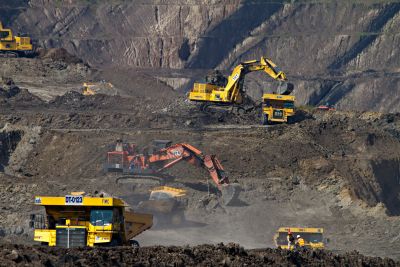
There is a quiet contradiction running through the global energy transition. The solar panels, wind turbines and electric mobility batteries that are meant to decarbonise the planet are built from cobalt, lithium, copper, manganese, graphite and rare earths and a remarkable share of those minerals comes out of African ground. Yet the continent that supplies the raw materials for the world's clean-energy future cannot reliably keep the lights on at its own mines, let alone power the machinery needed to turn ore into anything more valuable than ore. To say nothing of the over 600 million people on the continent with no access at all to meaningful electricity or only unreliable access. Unsdg | Decoding Africa’s Energy Journey: Three Key Numbers.
The continent holds an estimated 30% of the world's critical minerals and already led global production of cobalt, copper, gold and platinum-group metals in 2024. Revenues from just four of those minerals, namely copper, nickel, cobalt and lithium, are projected at roughly US$16 trillion over the next 25 years, yet African countries currently collect only around 40% of the potential value of what they mine. The rest leaves the continent as raw rock and reappears, at a vast markup, as somebody else's battery in an electric vehicle, electronic gadget or high-end AI data centre. That is the business-as-usual model: dig, ship, admire afar, dig again! It is the colonial pit-to-port economy in a green wrapper, and it needs to end.
The instinctive fix, banning raw exports and forcing processing onshore, is already being tried, and it shows exactly where the trap is. Zimbabwe banned raw lithium ore in 2022 and, in February 2026, accelerated a ban on lithium-concentrate exports to push refining into the country. Its lithium output has surged, from roughly 0.6% of global production in 2022 to about 10% in 2025, making it the world's fourth-largest hard-rock producer, and it exported some 1.128 million tonnes of spodumene concentrate in 2025, most of it to China. The intent of the ban is right. But the mines are largely Chinese-owned (Huayou, Sinomine, Yahua, Chengxin), the new refineries are Chinese-owned, and what they produce is an intermediate chemical, lithium sulphate, that flows straight back into Chinese supply chains. Value moves one step up the chain and then leaks offshore again: Zimbabwe's lithium exports earned it only around US$571 million in 2025. Meanwhile the DRC, source of roughly three-quarters of the world's cobalt, showed a blunter kind of power in 2025, halting cobalt exports outright in February and then capping them under a quota system from October at less than half of 2024 volumes. Prices rebounded sharply, by some measures more than 100% off their early-2025 lows. That is proof that supply discipline, not extraction volume, is the real lever. Neither story is decided by how the mine is powered. The critical-minerals contest is a contest over ownership, refining location and bargaining power.
So where does Productive Use of Renewable Energy (PURE) fit? Not, honestly, where the usual pitch puts it. PURE is a distributed, small-scale model: solar pumps, mills, cold chains, diesel displacement at artisanal sites. It cannot run a lithium-hydroxide refinery. Beneficiation is energy-intensive and needs firm, industrial baseload, and inadequate energy infrastructure is repeatedly named as one of the primary barriers to processing minerals on the continent. That energy gap is exactly where the opportunity hides, and almost nobody is using it.
Here is the radical proposal: make the power that beneficiation demands do double duty.
Tie the right to extract a critical mineral not just to refining it in-country, but to building the energy to refine it as deliberately oversized, shared infrastructure. A refinery is a perfect anchor load, a large, predictable, around-the-clock customer that makes a major hydro, solar-plus-storage or grid investment bankable in a way that scattered rural demand never could. Today that power is built privately, sized exactly to the plant, and walled off. Instead, mandate that it be built bigger than the refinery needs, with the surplus capacity and the grid spine it creates ringfenced for productive use across the surrounding region. The minerals economy becomes the anchor tenant that finally pays for the energy backbone everyone else has been told is unaffordable.
Pair it with two things that fix the leakage. First, a beneficiation dividend: hypothecate a fixed share of value-added revenue into a regional energy fund that finances distributed PURE, including irrigation, agro-processing, cold storage and small-scale mining, in the very districts doing the mining. Second, local equity in both the refineries and the power assets, so the value and the infrastructure do not simply belong to whoever built the plant. And do it as a bloc: the African Union's Africa Green Minerals Strategy, adopted in February 2025, already calls for regional coordination and value addition at source, and a producers' compact on cobalt, lithium or manganese would hold the bargaining power that any single country lacks alone.
This is what actually connects critical minerals to the PURE argument. Not the threadbare claim that solar microgrids will move Africa up the value chain, but the reverse. Mineral value-addition, done on the continent and structured deliberately, becomes the thing that finances and anchors the productive-energy base. Energy built for minerals seeds energy for development. PURE stops being an aid programme bolted onto agriculture and becomes the downstream dividend of resource sovereignty, the proof that processing minerals at home doesn't just capture revenue, it electrifies the economy around the mine.
Business-as-usual gives Africa a hole in the ground and a power cut. The alternative is to refine where you mine, and power where you refine, and let the same megawatts that make the batteries make the development too.
Frangton Chiyemura is a Lecturer in International Development at the School of Social Sciences & Global Studies, The Open University, United Kingdom and works at the intersection of energy and development focusing on China and Africa.
Charles Mbalyohere is Senior Lecturer of Strategic Management at The Open University and Convenor of Sustainable Energy – Research and Applications (SERA) cluster.

Stay in touch


Explore

Undergraduate
Postgraduate
Policy
-
Follow us on Social media
-


