
Caring Feminisms Across Borders Conference
- Date
- to
- Location
- University of Donja Gorica, Oktoih 1, Podgorica 81000, Montenegro

Conference theme: Caring Feminisms Across Borders
Drawing on the rich energy, interdisciplinarity, and intersectional solidarity cultivated over decades of feminist work in organisation studies, we are delighted to invite submissions for the 2026 conference, Caring Feminisms Across Borders.
In a global context of widening inequalities and intensifying social, political, and economic pressures, feminist scholarship and practice are both urgently needed and increasingly under threat. These inequalities are marked by growing challenges to ‘the democratic promise of freedom and equality’ (Smolović Jones et al., 2024: 954), particularly for women who occupy marginalised intersecting subject positions. At the same time, as profit-making becomes entrenched as ‘the organising principle of life’ (The Care Collective, 2020: 3; Tronto, 2013), we are witnessing the rise of ‘defective’ democracies (Đukanović, 2022) and the systematic erosion of the infrastructures that support equality, justice, and collective wellbeing.
Key information
- Abstract submission deadline: 31 May 2026
- Conference dates: 2 - 4 September 2026
- Conference venue: University Donja Gorica (UDG), Podgorica, Montenegro
In this precarious landscape, the need to build and sustain caring communities for feminist scholars and practitioners is not only timely but essential. In increasingly hostile contexts, such communities offer spaces of meaningful resistance, solidarity, and hope. They embody the spirit of collaboration, ‘coming together as a mass movement’ (Judith Butler in Tyler et al., 2024), engaging in acts of resistance with care (Bowes-Catton et al., 2020), and recognising our deep and enduring interdependence (Butler, 2020). They invite us to assemble, organise, and imagine otherwise – placing care ‘at the heart of everything’ we do (Segal, 2023: 7).
What we are looking for: This conference welcomes research that advances knowledge through interdisciplinary insight, embracing care as both a concept and a practice that bridges organisation studies, sociology, political science, moral philosophy, and related fields.
We especially encourage submissions that (i) illuminate care practices and concepts emerging within under-resourced or marginalised organisational contexts; (ii) aim to strengthen the global feminist commitment to care in theory, or through democratic engagement (Raičević, 2022); and/or (iii) explore inclusive understandings of what it means to be, live, and work as a feminist.
We invite conceptual, empirical, and methodological contributions that consider the transformative potential of care to enrich theoretical frameworks, challenge neoliberal and hierarchical modes of organising, and inspire more collaborative, compassionate and durable approaches to feminist research and praxis. We also invite unorthodox formats of expression (e.g., poems, collages, graphic-novel-like stories, soundscapes, etc.).
Our aim is to be inclusive, imaginative and hopeful as we draw feminist scholars, activists and communities together to consider what caring feminism across borders might mean now and for the future.
- Four confirmed keynote speakers, Professor Lynne Segal, Fana Delija, Paula Petričević and Joan Tronto, will address the topic of care from their philosophical, political and experiential standpoints. The speakers will also take part in other conference events, mixing with participants, participating in informal discussions and providing feedback. Other keynote speakers to be confirmed.
- The welcome reception will be structured to generate connections between delegates, pairing experienced scholars with ECRs and PhD students.
- A workshop for ECRs and PhD students on researching gender across various disciplines and publishing in globally esteemed journals. The workshop will support participants to better understand the process of publishing. It will be developed and delivered by scholars who have extensive experience in editorial roles for world-leading journals.
- A workshop on intersectionality in research and activism. This session introduces intersectionality as a framework for understanding how overlapping identities and social structures shape privilege and oppression. Participants will explore how intersectional approaches can strengthen research and activism, bridging theory and practice while fostering collaborative, inclusive knowledge-building across disciplines.
- Streams: We envisage up to five streams themed around cutting-edge research topics, designed to support delegates to submit full papers to reputable academic journals.
- An exhibition marking the 10th anniversary of the revival of 8 March as a political holiday in Montenegro, presenting posters created to mobilize, inspire action and foster solidarity, while reflecting the social and political context of feminist struggle. The exhibition will be open for viewing on 2 September, featuring a conversation with the author at the scheduled time.
We kindly request that an abstract of maximum 500 words (excluding references) is submitted as a Word document to the conference email address: [email protected]
Please note that PDF documents are not suitable. To meet the quality standard please ensure that your key argument is conceptually and methodologically situated, and supported by appropriate references, that the abstract clearly states conceptual and/or practical implications and that your findings are clearly surfaced.
Finally, it is essential to ensure consistent and accurate in-text citation, as well as to include a complete and properly formatted reference list at the end of the paper, in accordance with the selected citation style.
The submission deadline is Sunday 31 May 2026. Notification of acceptance will be circulated to authors in early June.
There will be 100 delegates in total, with 20 free places reserved for PhD students and early career scholars. Priority for the free places will be given to those from Montenegro and other underprivileged regions, who have previously had very limited opportunity to participate in international conferences. An additional 100 places will be offered for keynote sessions only.
Due to the limited number of places available, paper submissions will be considered on a first-come, first-served basis, provided they meet the required quality standards. We will operate a waiting list should additional places become available (e.g., due to delegates’ inability to travel or missed registration deadline)
A PDF version of the finalised programme can be downloaded below. If preferred, you can download a Word version of the programme.
There will be an optional dinner with conference delegates on one evening at Restoran Radovče. The date for this will be confirmed in advance of the conference.
- Three course fixed price menu £26.00 per person payable in advance
- Drinks and tip not included in above cost and to be paid for at an additional cost on the night
- Meat-based, pescatarian, vegetarian and vegan menus are available - view the menu options. Please select your chosen menu at the time of booking
Registration details
Early bird fee: £350 (Closes 30 June 2026)
Standard fee: £450
PhD student and early career fee: £0
Tickets to attend the gala dinner will be an additional £26. Registration for the above tickets closes 14 August 2026.
Keynote only fee: £15 (Closes 4 September 2026)
Keynote speakers
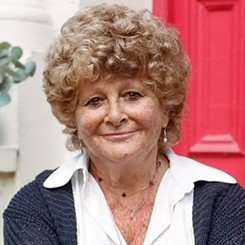
Lynne Segal
Lynne Segal is Anniversary Professor Emerita in Psychosocial Studies at Birkbeck, University of London. She is a feminist writer and activist, whose books include Is the Future Female? Troubled Thoughts on Contemporary Feminism; Slow Motion: Changing Masculinities, Changing Men; Straight Sex: The Politics of Pleasure; Why Feminism? Gender, Psychology & Politics; Making Trouble: Life & Politics; Out of Time: The Pleasures & Perils of Ageing; Radical Happiness: Moments of Collective Joy and The Care Manifesto: The Politics of Interdependence (co-written). Her most recent publication is Lean on Me: A Politics of Care. As a Jewish activist she has worked for decades on peace and justice for Palestinians, and in general continues to work on the fortunes of feminism, gender, ageing, care, solidarity and friendship.
Today we see inequality and carelessness evident globally, ensuring that essential resources can be hard to access for many people in most need of them. One response to any such signs of social crisis can be seen in the growing rise of the Right, with its populist nationalism and policies of exclusion. A second, promoting inclusive practices of resistance and hope, begins from the need not just to prioritize care, but to unpack its complexities, noting its traditional devaluation. Here, I draw upon my latest book, Lean on Me, which argues that the only way to combat the pessimism feeding reactionary movements is to insist upon our globally entwined interdependence and shared vulnerability. Embracing the interconnected vulnerability of human existence helps deepen our commitment to a compassionate, inclusive sociality, which places expanded notions of care at the very heart of our politics and democratic survival.
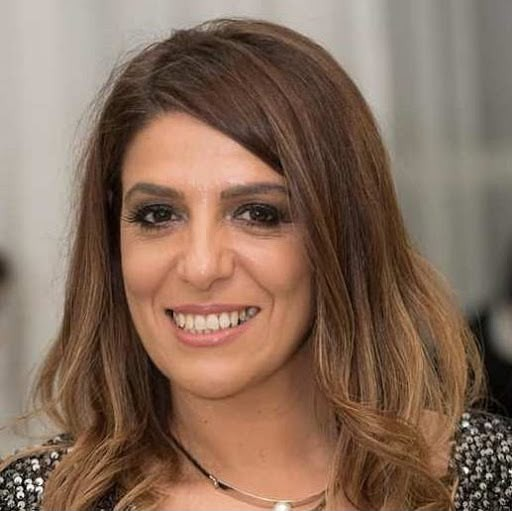
Fana Delija
Ms Fana Delija is the Executive Director of the NGO Centre for Roma Initiatives (CRI) in Nikšić, Montenegro, an organisation she has led since its establishment in 2004. She holds a degree in Pedagogy and a master's degree focused on the causes and consequences of early school leaving among Roma and Balkan Egyptian children in Montenegro, Bosnia and Herzegovina and Serbia. Over the course of her career, she has implemented more than 100 projects addressing domestic violence, education, anti-discrimination and the prevention of child marriages. In recognition of her contribution to the integration and empowerment of Roma and Balkan Egyptian communities, she has received six international awards, including the Anna Lindh Award and the European Commission's 'Unsung Heroines' Award.
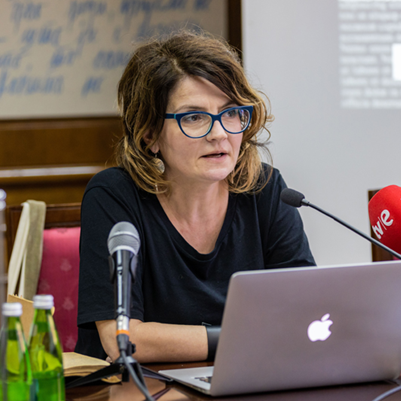
Paula Petričević
Paula Petričević is a trailblazing feminist activist from Kotor, one of the most prominent voices of contemporary Montenegrin feminism, the Ombudswoman of the daily newspaper Vijesti and the weekly Monitor, and a philosophy professor at the Gymnasium in Kotor. She graduated in philosophy, earned a Master’s degree in political science, and is currently a doctoral candidate at the Faculty of Political Sciences at the University of Belgrade. She has also worked as the programme director of the Centre for Civic Education in Podgorica and as a long time lecturer in women’s and peace studies at Anima – Centre for Women and Peace Education. Through her extensive journalistic, research, and theoretical work, she engages with gender theory, media ethics, human rights, critiques of nationalism, and analyses of feminist legacies, publishing in both national and international outlets and contributing to regional platforms such as Medfeminiswiya and Kosovo 2.0. Her work is grounded in an understanding of feminism as a struggle against all forms of oppression, as well as in public advocacy for women’s rights, media responsibility, and social ethics.

Joan Tronto
Joan C. Tronto is professor emerita of political science at the City University of New York and the University of Minnesota. She is the author of many works on care ethics, including over 50 articles and several books, including Moral Boundaries: A Political Argument for an Ethics of Care (Routledge, 1993) Caring Democracy: Markets, Equality and Justice (NYU Press, 2013). In 2023 she received the Lippincott Award for outstanding work in political theory from the American Political Science Association. She served as a Fulbright Fellow in Italy and has been awarded two honorary doctorates from the University for Humanistic Studies in the Netherlands and Louvain University in Belgium. Her work has been translated into more than a dozen languages.
This paper applies a care-ethical analysis to the current political economy, which I more aptly describe here as “wealth-care.” From this fundamentally feminist perspective, great unequal wealth generates not only inequality as it is conventionally understood, but a variety of other distortions of human life as “wealth” pursues its needs. The resulting forms of precarity for most people create incentives to turn to anti-democratic forms of protections that further deepen the separation among people and undermine commitments to equality and freedom. A commitment to caring democracy provides a way to combat these forces and move towards more equal and free relations among humans and a better relationship to the planet.
A Warm Welcome to Podgorica, Montenegro

Conference organisers Nela Smolović Jones, Jo Brewis, Melissa Tyler, Maja Raičević, Sara Loiuse Muhr, and Nikoleta Đukanović extend a heartfelt, feminist welcome to Podgorica, Montenegro, a city and country shaped by rich histories of resistance, care, and collective struggle for equality.
While feminism is still finding fuller consolidation within Montenegrin academia, Montenegro boasts a vibrant and resilient feminist legacy. From the fearless Illyrian warrior queen Teuta (231 BCE), through the powerful mobilisation of the Antifascist Front of Women during World War II, anti-war feminist protestors in the 1990s, to today’s feminist campaigners, scholars, and practitioners of all genders, the fight for justice and equality has remained a constant force.
Importantly, this struggle has always been rooted in solidarity, forged through cross-territorial, cross-national, and cross-cultural alliances. Feminist activism in Montenegro has consistently drawn strength from the diversity of its people and beyond, building collective movements that transcend borders and identities in pursuit of shared democratic goals.
Podgorica, the capital, reflects this spirit. A city where history of multiculturalism and natural beauty converge, it is nestled between six rivers (Morača, Ribnica, Zeta, Sitnica, Mareza, and Cijevna) and surrounded by the Kučka Korita and the Prokletije range of the Dinaric Alps. Within such setting, Podgorica offers a relaxed, welcoming atmosphere and is rich in contrasts, from Ottoman-era architecture and socialist-modernist landmarks to lively cafés, galleries, and green spaces.
As Montenegro’s political and administrative centre, Podgorica is also a gateway to the country’s breathtaking landscapes: the UNESCO-protected Lake Skadar, the stunning Adriatic coast, and the majestic mountains of the north, all within easy reach. Its diverse communities, evolving identity, and inclusive spirit make it a meaningful and inspiring setting for conversations on care, feminism, and solidarity across borders.
Essential Montenegro travel information
- Currency: Euro. Preferred payment option a bank card, although some services (e.g. taxi) only use cash, so please make sure you bring some cash with you. Please be advised that ATMs impose a withdrawal fee, including for euro-denominated bank cards, and the maximum permitted daily withdrawal is €200.
- Airport: Podgorica Airport (approximately 15 min drive from the city centre)
- Emergency number: 112
- Hotel recommendations: voco Podgorica Hotel (3 minute walk from UDG), Philia Hotel Podgorica (5 min drive to UDG), Apart Hotel Compliment (8 min drive to UDG)
- More on Montenegro: Visit Montenegro website
Public transport
Public buses run approximately every 30 minutes and provide an affordable way to travel around the city. Our local co-organisers recommend the Moovit app for route planning and journey information. Buses L8 and L20 stop near the conference venue, University of Donja Gorica.
A single bus ticket typically costs around €1 and is purchased in cash directly from the driver, so we recommend carrying some small notes and coins. Please note that bus timetables are not always fully reliable or up to date, so it is advisable to arrive at your bus stop a little earlier than planned.
Taxis
Although University of Donja Gorica (UDG) is located on the outskirts of the city, Podgorica is relatively compact, and taxis are a convenient and affordable option for travelling to and from the conference venue.
Our recommended taxi provider is PG Taxi. You can book a taxi by sending a message via Viber to: +382 68 119 704
As a guide to local fares:
- A taxi journey between Philia Hotel and UDG typically costs €3-4.
- A taxi journey between Apart Hotel and UDG typically costs €4-5.
We also anticipate that many delegates will be able to share taxi rides, making this an even more economical option.
Airport transfers
Delegates will need to arrange transport from Podgorica Airport to their accommodation. We recommend either:
- Booking an airport transfer in advance using these providers Vuk Taxi or Zeta Taxi; or
- Using the official TAXI kiosk located inside the airport terminal before exiting.
Both options typically cost around €20.
Important: Please avoid accepting offers from drivers outside the airport terminal or hailing a taxi independently at the airport, as fares can be considerably higher. For the most reliable and transparent pricing, we strongly recommend using one of the official transfer options listed above.
Conference organisers
- The Open University’s Gendered Organisational Practice (GOP) research cluster
- Judith Butler network
- The Montenegrin non-governmental organisation, Women’s Rights Centre (WRC)
- Organising democracy, diversity and alternatives (Orgadiva)
- The feminist community of scholars at UDG

With special thanks to:

Verso, for donating copies of The Care Manifesto to the conference.

SAMS, for allocating funds to this conference to support ECRs.
 Vinarija Rakcevic Smokovci, Vinarija Markovic and Kekovic Estate for donating wine for the welcome reception.
References
- Bowes-Catton, H., Brewis, J., Clarke, C., Drake, D. H., Gilmour, A., & Penn, A. (2020). Talkin’ ’bout a revolution? From quiescence to resistance in the contemporary university. Management Learning, 51(4), 378-397.
- Butler, J. (2020). The Force of Nonviolence: An Ethico-Political Bind. London: Verso.
- Chatzidakis, A., Hakim, J. Littler, J. Rottenberg, K. and Segal, L. (2020). The care manifesto. London: Verso.
- Đukanović, N. (2022). Democratization and Europeanization in Montenegro - Towards ‘Defective Democracy’. In Adam Bence Balazs (ed.), The Europeanization of Montenegro, A Western Balkan Country and its Neighbourhood in Europe and the Global World. Baden-Baden: Nomos Publishing, pp. 211-238.
- Raičević, M (2022). Gender Analysis of Public Administration in Montenegro. Podgorica: WRC.
- Smolović-Jones, N., Johansson, M., Pullen, A., & Giritli-Nygren, K. (2024). Feminism and social movements: Notes on hope and despair. Gender, Work and Organization, 31(3): 954-960.
- Segal, L. (2023). Lean On Me: A Politics of Radical Care. London: Verso.
- Tronto, J. (2013). Caring Democracy: Markets, Equality, and Justice. New York: New York University Press.
- Tyler M, Butler J, Cutcher L, Milroy T, Lloyd M, Riach K, Kenny K, Al‐Amoudi I, Guschke B, Harding N, Smolović‐Jones N. (2024) Strangers in conversation: Judith Butler with gender, work and organization. Gender, Work and Organization. 31(4):1444-62.


Explore

Undergraduate
Postgraduate
Policy
-
Follow us on Social media
-


