
Issam Adwan
Research Student
Issam Adwan is affiliated with the Department of People and Organisations.
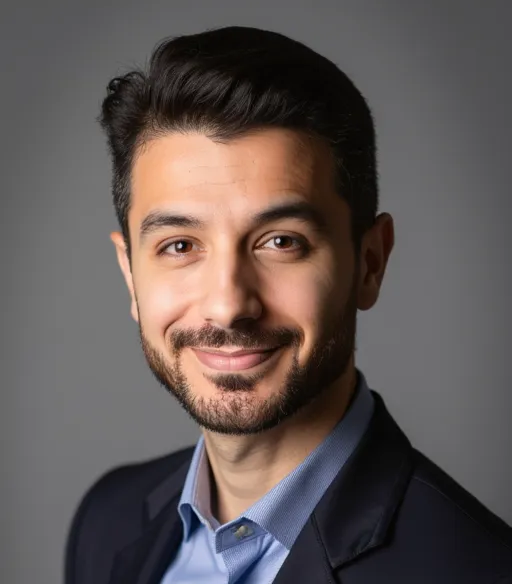
You can email Issam Adwan directly but for media enquiries, please contact a member of The Open University's Media Relations Team.
Biography
Issam Adwan is a Palestinian researcher whose work bridges international media, grassroots activism, and academic inquiry. He has worked as a journalist for global outlets including The Associated Press and Al Jazeera English, providing frontline coverage and investigative reports from Gaza during times of crisis. His leadership experience includes serving as director of We Are Not Numbers, where he represented Palestinian voices internationally, and teaching political translation and media studies at Al-Azhar University in Gaza.
Current Research
Leadership and Resilience in Post-Conflict Reconstruction: The Case of Gaza’s Post-2023 War
Adwan's doctoral research examines how leadership emerges and operates in Gaza in the aftermath of war, with a particular focus on grassroots, collective, and non-hierarchical practices. Drawing on both scholarly frameworks and lived experience, his work investigates how community-driven initiatives resist external domination, reclaim indigenous governance traditions, and foster resilience amidst displacement and destruction.
Moving beyond conventional hierarchical models, the research draws on decolonial perspectives to explore collective decision-making, non-hierarchical organising, and “leaderlessness” as frameworks for leadership in conditions of extreme instability. Using ethnographic fieldwork, discourse analysis, and case studies, the project analyses how Gazans generate and sustain resilience while navigating external interventions and internal displacement.
By conceptualising leadership as an emergent, community-driven practice, the study challenges dominant paradigms in leadership and post-conflict governance. It demonstrates how indigenous traditions and collective organising offer adaptive alternatives for societies under protracted conflict. The findings provide empirical insights for policymakers, humanitarian organisations, and scholars, emphasising the necessity of contextually grounded leadership models in war-affected regions.
Supervisors

Stay in touch


Explore

Undergraduate
Postgraduate
Policy
-
Follow us on Social media
-


